
A skeptic’s honest verdict on the internet’s favorite fusion dessert — the flavor, the ingredients, the calories, and the recipe that finally won me over.
The first time I heard “matcha tiramisu,” I made a face. An actual, visible, slightly judgmental face. Tiramisu is coffee, mascarpone, cocoa — a flavor vocabulary I’d spent years getting right. Matcha felt like it was crashing the party in a completely different outfit.
Then I tried it. And then I made it five more times, mostly because I couldn’t stop thinking about it.
If you’ve landed here wondering whether this combination actually works, what’s really in it, whether it’ll get you tipsy, or how many calories you’re signing up for — I’ve got answers, pulled from a lot of kitchen trial and error rather than internet hearsay.
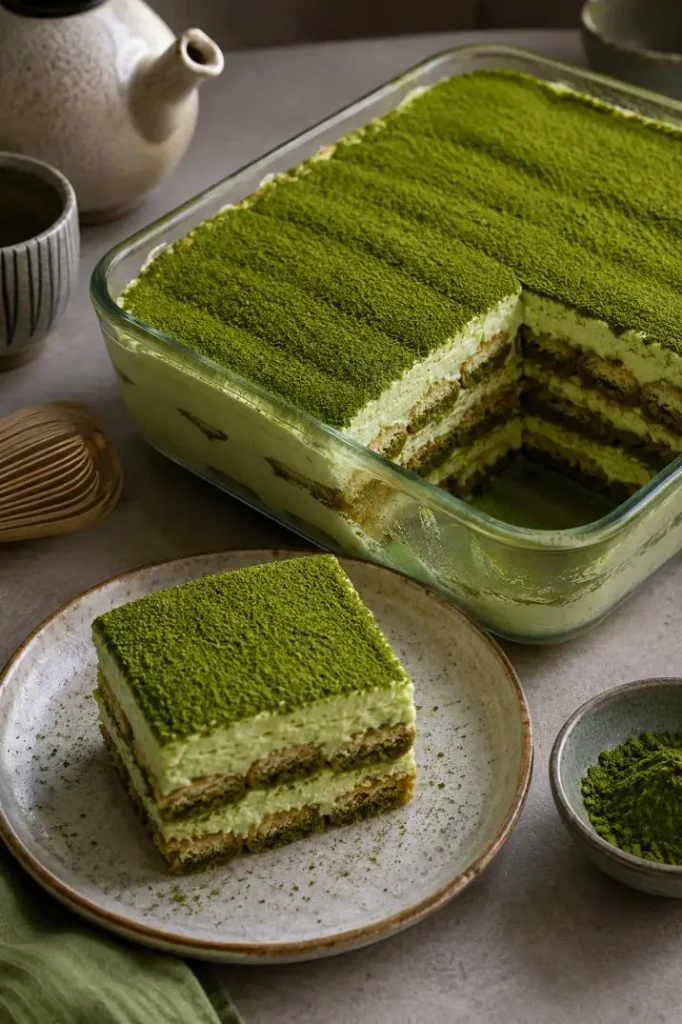
Quick Answers
- Matcha and tiramisu genuinely complement each other — bitterness cutting through richness is the same trick coffee normally pulls off.
- Classic tiramisu contains raw egg and a splash of alcohol (usually Marsala or rum); most matcha versions drop the alcohol since it competes with the tea.
- A slice typically runs 300–450 calories, depending mostly on the mascarpone and sugar — the matcha itself is basically calorie-free.
- Culinary-grade matcha, not the pricier ceremonial grade, is actually the better choice for baking.
- The “30/20/10” whisking rhythm helps you avoid a gritty, clumpy soak.
Wait, Does Matcha Even Belong in Tiramisu?
Here’s the thing about matcha: its whole personality is bitterness and grassy intensity, with a little natural sweetness underneath if you’re using the good stuff. Tiramisu’s whole personality is rich, sweet, and a touch boozy. On paper, that shouldn’t work.
Except bitterness and fat are old friends. Think espresso and cream, or dark chocolate and caramel. In matcha tiramisu, the tea is doing the exact job coffee normally does — cutting through all that mascarpone richness so the dessert doesn’t collapse into a brick of sweetened cheese.
What matcha genuinely doesn’t play well with are strong, competing flavors — citrus zest, heavy cinnamon, anything smoky. It wants a supporting cast that stays quiet, which is exactly what mascarpone, sugar, and cream give it.
One thing worth knowing before you shop: skip the fancy ceremonial-grade tin you’d use for a proper bowl of tea, and save that for sipping. Culinary-grade matcha is bolder and more bitter, holds its color and flavor better once it’s mixed with sugar and cream, and costs noticeably less. If you want a drink alongside your slice, don’t double down on more matcha — go for contrast instead, like a light-bodied red, a dry sparkling wine, or if you’re keeping it alcohol-free, jasmine tea or a straightforward espresso.
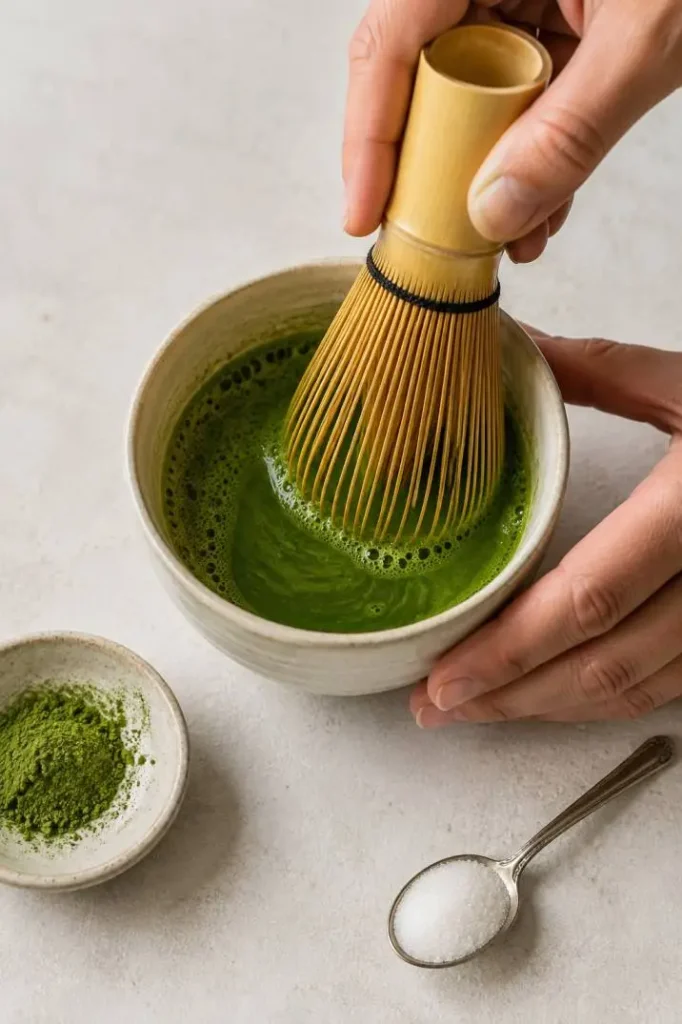
One small technique actually matters here: when you whisk your matcha for the soak, use what people call the 30/20/10 rhythm — brisk whisking first to break up the powder, then easing off as it foams. It’s more of a feel than a strict rulebook, but it’s the difference between a silky soak and a gritty one, and gritty matcha is the fastest way to sabotage an otherwise great dessert.
What’s Actually In a Matcha Tiramisu?
Strip it down, and matcha tiramisu is just tiramisu with a green tea twist. Ladyfingers, mascarpone, sugar, cream — the classic backbone — soaked in whisked matcha instead of espresso, layered, and dusted with more matcha instead of cocoa on top.
Matcha itself is a single ingredient: shade-grown green tea leaves, stone-ground into a fine powder. Nothing else, in a good one — which is also why cheap matcha (dull olive color, tastes like boiled spinach) makes such a noticeably worse dessert than the real thing does.
As for tiramisu’s classic lineup — mascarpone, eggs or whipped cream, sugar, ladyfingers, and traditionally a splash of Marsala wine or dark rum — most matcha versions keep everything except the alcohol, since rum tends to fight the tea rather than complement it. And no, you won’t get tipsy off a slice either way; even in the classic recipe, the alcohol is a background note, not a pour.
Matcha is doing the exact job coffee normally does in tiramisu — it’s just wearing a different shade of it.
What Does It Actually Taste Like?
On its own, matcha tastes like grass that went to finishing school — vegetal, gently bitter, with a savory undertone and a natural sweetness if the quality is there. It’s closer to a lightly bitter herbal tea than to anything fruity or floral.
Fold that into tiramisu and something interesting happens: the bitterness softens against the mascarpone, the sugar rounds out the edges, and what’s left tastes bright and faintly earthy rather than sharp. Classic tiramisu leans deep and toasty from the espresso; matcha tiramisu is lighter and greener, with a cleaner finish. If you’ve had a version that tasted purely sweet with barely any tea presence, that’s usually a sign it was made with a pale “culinary blend” powder rather than real matcha.
Okay, But How Many Calories Are We Talking?
Depending on how it’s made, a slice generally lands somewhere between 300 and 450 calories, with mascarpone-heavy versions climbing higher and lighter, yogurt-based takes coming in well under that. Worth repeating: the calories aren’t coming from the matcha. A teaspoon of matcha is basically negligible calorically — the real drivers are the same ones in every tiramisu, full stop: mascarpone, sugar, and cream.
Which raises the bigger question — is it “healthy”? Compared with, say, a slice of layer cake, tiramisu sits somewhere in the middle of the dessert pack: not diet food, but not the heaviest thing on the menu either. Matcha does add a small nutritional upside, since it’s rich in catechins, a type of antioxidant — but let’s be honest, nobody’s ordering tiramisu for the antioxidants. If you are watching calories, the easiest lever to pull is swapping part of the mascarpone for Greek yogurt or trimming the sugar in the soak. You’ll lose a little richness, but the matcha flavor holds up fine.
My Go-To Matcha Tiramisu Recipe
No-Bake Matcha Tiramisu
Serves 825 min active4 hrs chill (overnight best)
Matcha Soak
- 2 tsp culinary-grade matcha powder
- ¾ cup hot water (not boiling — around 175°F)
- 2 tbsp granulated sugar
Mascarpone Cream
- 16 oz (450g) mascarpone, room temperature
- 1 cup heavy cream, cold
- ½ cup granulated sugar
- 1 tsp vanilla extract
Everything Else
- 24 ladyfinger biscuits (savoiardi)
- 2–3 tsp matcha powder, for dusting
Method
- Make the soak. Whisk the matcha into the hot water using the 30/20/10 rhythm — brisk at first, then easing off as it foams. Stir in the sugar until dissolved. Let it cool to room temperature.
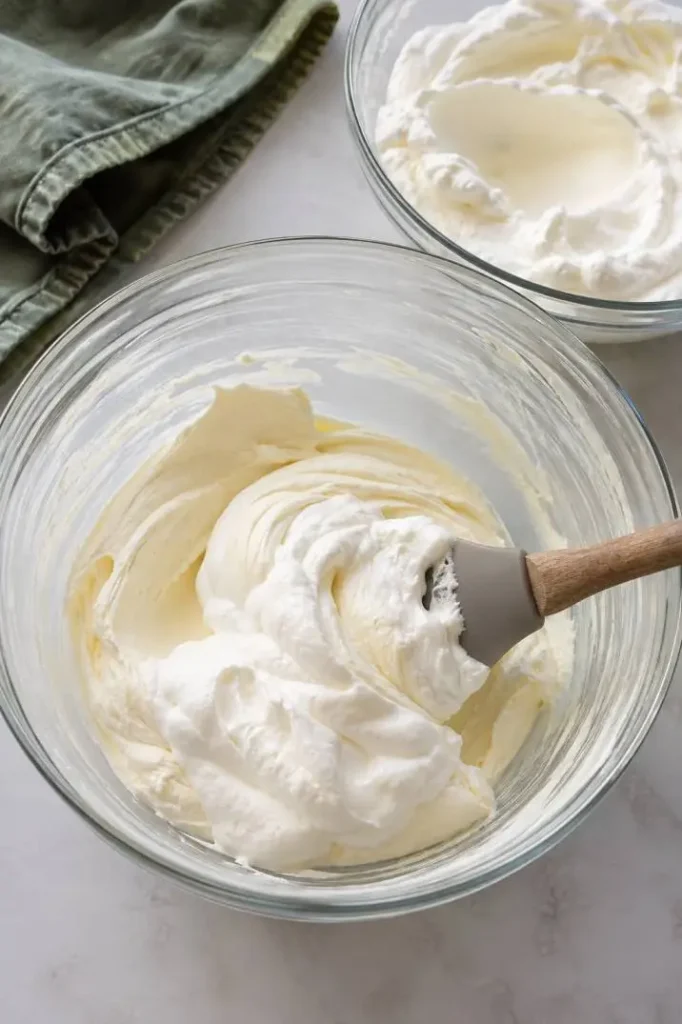
- Whip the cream. In one bowl, whip the heavy cream to soft peaks. In another, beat the mascarpone with the sugar and vanilla until smooth — don’t overbeat, or it can turn grainy. Fold the whipped cream into the mascarpone mixture in two batches, keeping it light and airy.
- Dunk the ladyfingers. Working quickly, dip each ladyfinger into the matcha soak for about one second per side — they should absorb liquid but stay structured, not mushy.
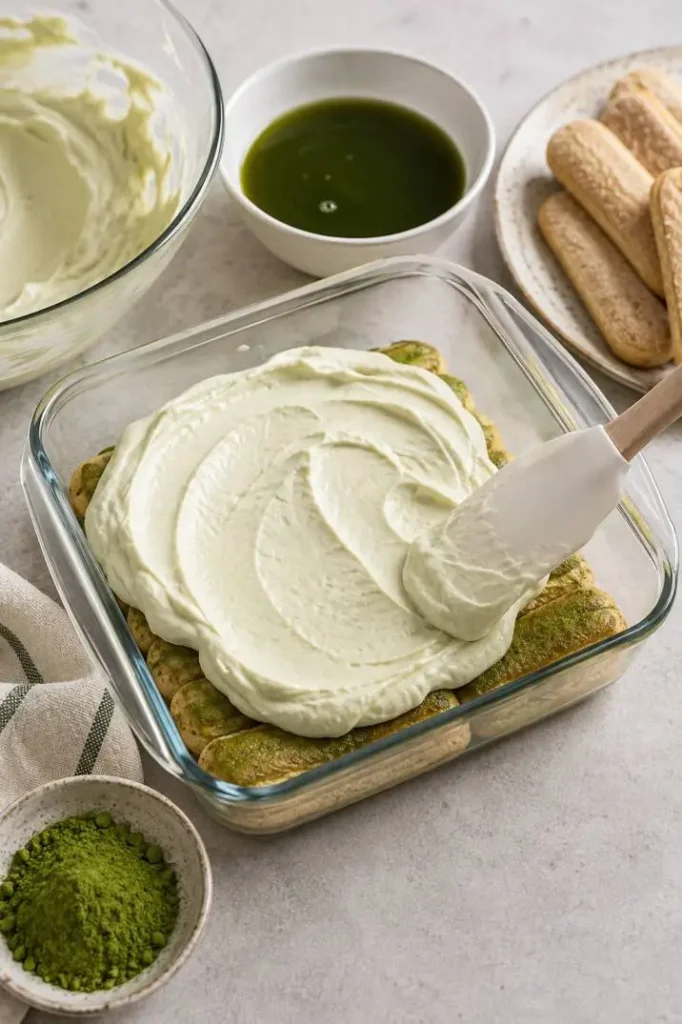
- Layer. Arrange half the dunked ladyfingers in a single layer in an 8×8-inch dish. Spread half the mascarpone cream over the top. Repeat with a second layer of ladyfingers and the remaining cream, smoothing the top.
- Chill. Cover and refrigerate for at least 4 hours, ideally overnight — this is what lets the layers soften into that classic tiramisu texture.
- Finish. Just before serving, dust generously with matcha powder through a fine sieve. Slice and serve cold.
Want it boozy? Add 1–2 tbsp of your matcha soak’s water content back with a splash of white rum instead — it plays nicer with the tea than dark rum or Marsala does. Prefer it egg-based like a traditional tiramisu? You can swap the whipped cream for 3 egg yolks whisked with the sugar over a double boiler until pale and thick, then folded into the mascarpone — just note the finished dessert should then be eaten within a day or two.
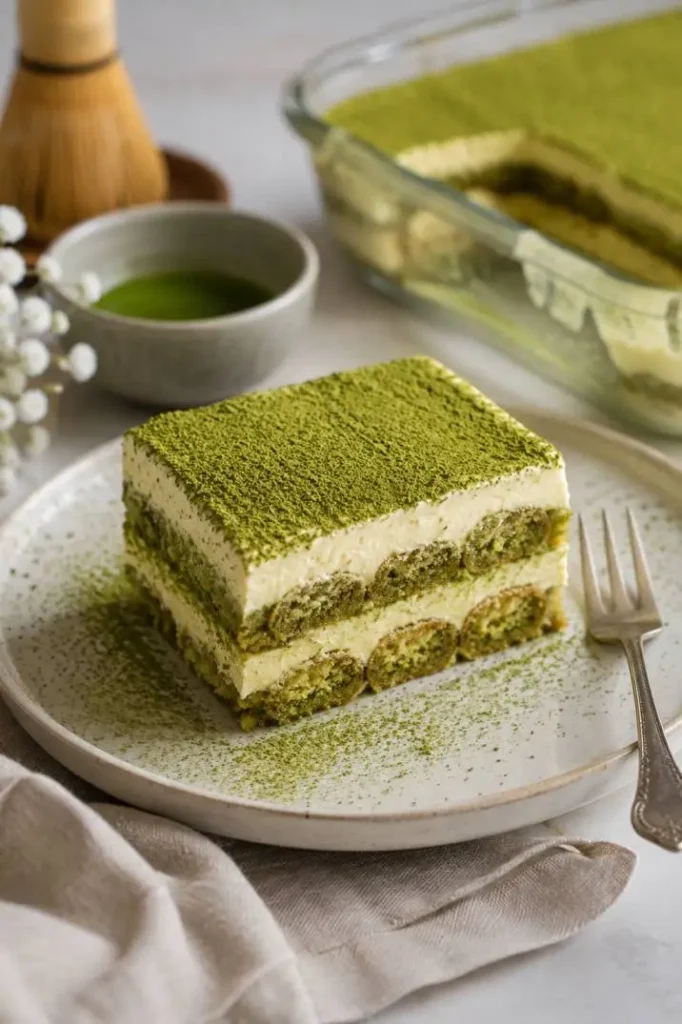
So, does matcha belong in tiramisu? After six batches and probably too many late-night bites straight from the fridge, my answer is an unqualified yes — as long as you use real matcha and don’t skimp on the mascarpone. This isn’t a gimmick flavor mash-up. It’s genuinely one of the better fusion desserts I’ve made, and it disappears from my fridge faster than the original ever did.
Made it? I’d love to hear how it turned out.
Leave a comment below, or tag your version — this is a great one to make your own.