
Why most home cooks get shrimp wrong — and the two-minute fix that changes everything.
I’ve watched a lot of good cooks ruin good shrimp. Not from lack of skill — from lack of patience. Shrimp goes from perfectly tender to rubbery in about ninety seconds, and there’s no walking it back once it happens. The good news? Once you understand what’s actually going on in that pan, garlic butter shrimp becomes one of the fastest, most foolproof dinners in your entire repertoire. I make a version of this at least once a week, and it’s never once taken more than fifteen minutes from fridge to table.
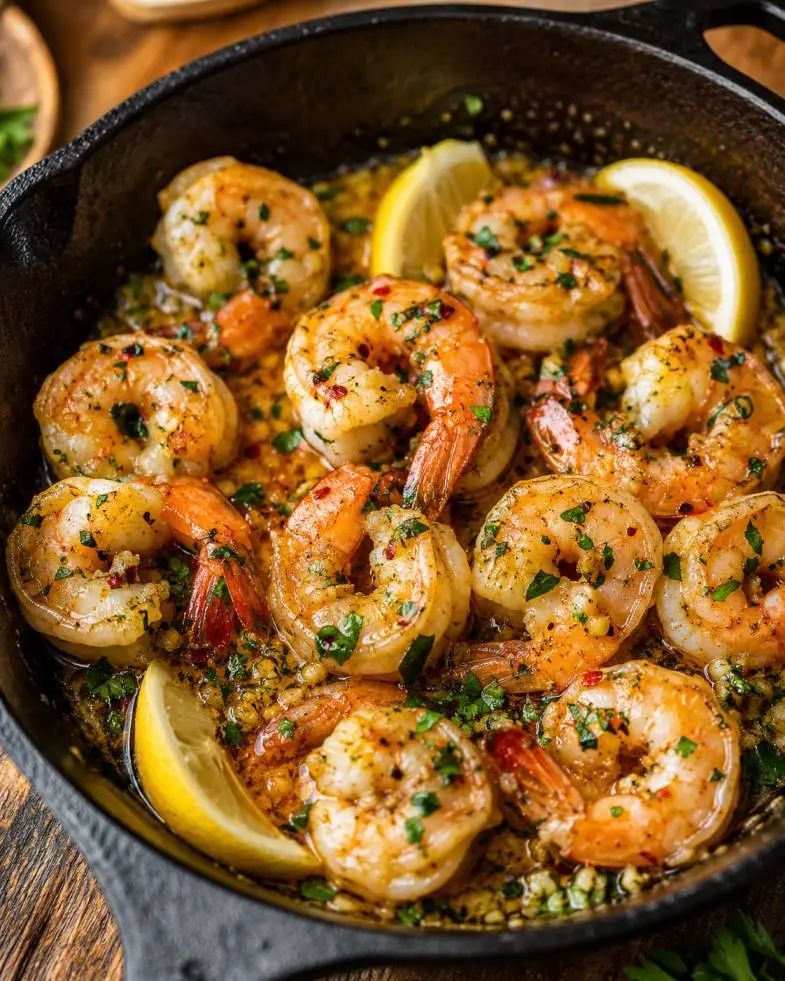
What you’ll walk away with:
- A full garlic butter shrimp skillet recipe, start to finish
- The real answer on butter vs. oil (it’s not what most blogs tell you)
- The three mistakes that turn tender shrimp into rubber
- How to pull this off with frozen shrimp, no thawing drama
- What NOT to throw in the pan with your shrimp
Butter or Oil? Here’s the Honest Answer
Everyone wants a clean yes-or-no on this, and I get why — but the truth is, you want both, used at different moments. Butter alone burns fast; its milk solids scorch well before shrimp finishes cooking, and burnt butter tastes bitter, not rich. Straight oil, meanwhile, cooks beautifully but gives you none of that nutty, rounded flavor butter is famous for.
My method: start with a neutral oil to get the pan properly hot, sear the shrimp, then swirl in butter at the very end along with the garlic. You get a high-heat sear and that glossy, garlicky butter finish — without the burnt-butter bitterness that ruins so many home attempts.
The Recipe
Garlic Butter Shrimp Skillet
⏱ Prep: 10 min🔥 Cook: 6 min🍽 Serves: 4
Ingredients
- 1½ lbs large shrimp (16–20 count), peeled and deveined, tails on or off
- 2 tbsp neutral oil (avocado or light olive oil)
- 4 tbsp unsalted butter, cut into pieces
- 6 garlic cloves, minced
- ½ tsp red pepper flakes (optional)
- ¼ cup dry white wine or chicken broth
- Juice of 1 lemon
- 3 tbsp fresh parsley, chopped
- Salt and black pepper, to taste
Instructions
- Pat the shrimp completely dry with paper towels. Season with salt and pepper. This step matters more than any other — wet shrimp steams instead of searing.
- Heat the oil in a large skillet over medium-high heat until it shimmers.
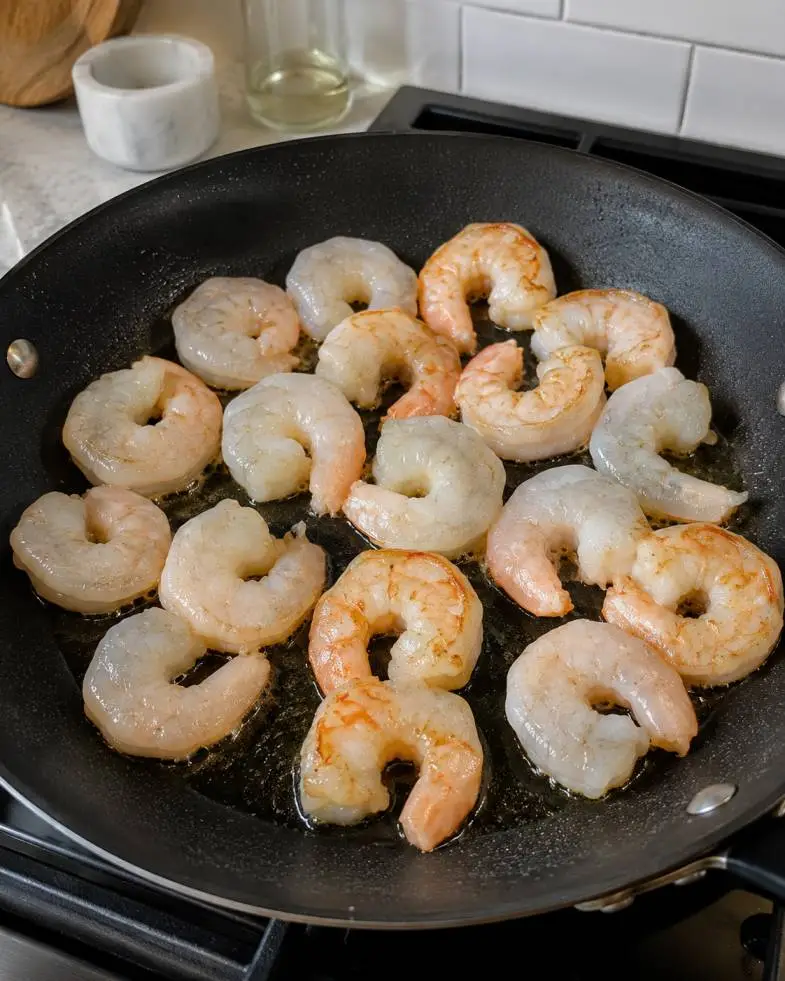
- Add shrimp in a single layer, without crowding. Sear 60–90 seconds per side, until pink and just opaque. Remove to a plate immediately — they’ll finish cooking off the heat.
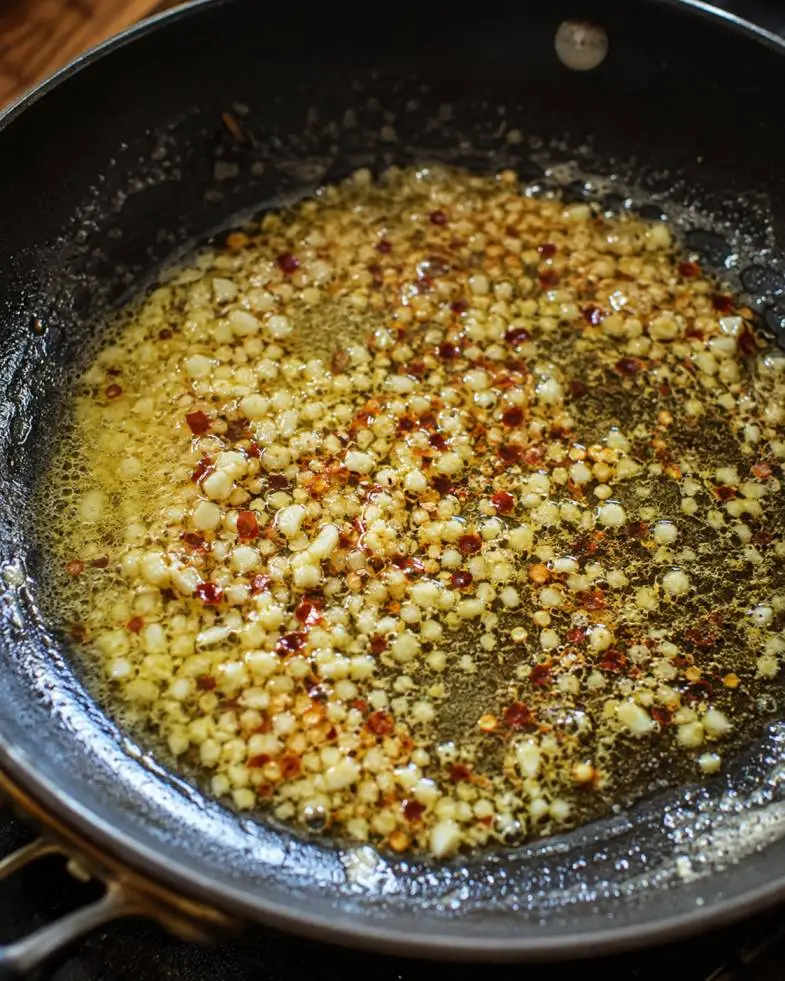
- Lower the heat to medium. Add butter, garlic, and red pepper flakes. Stir for 30 seconds, just until fragrant — garlic burns fast, so don’t walk away.
- Pour in the wine or broth, scraping up any browned bits. Let it bubble and reduce for about a minute.
- Stir in the lemon juice, then return the shrimp to the pan just to warm through, about 30 seconds.
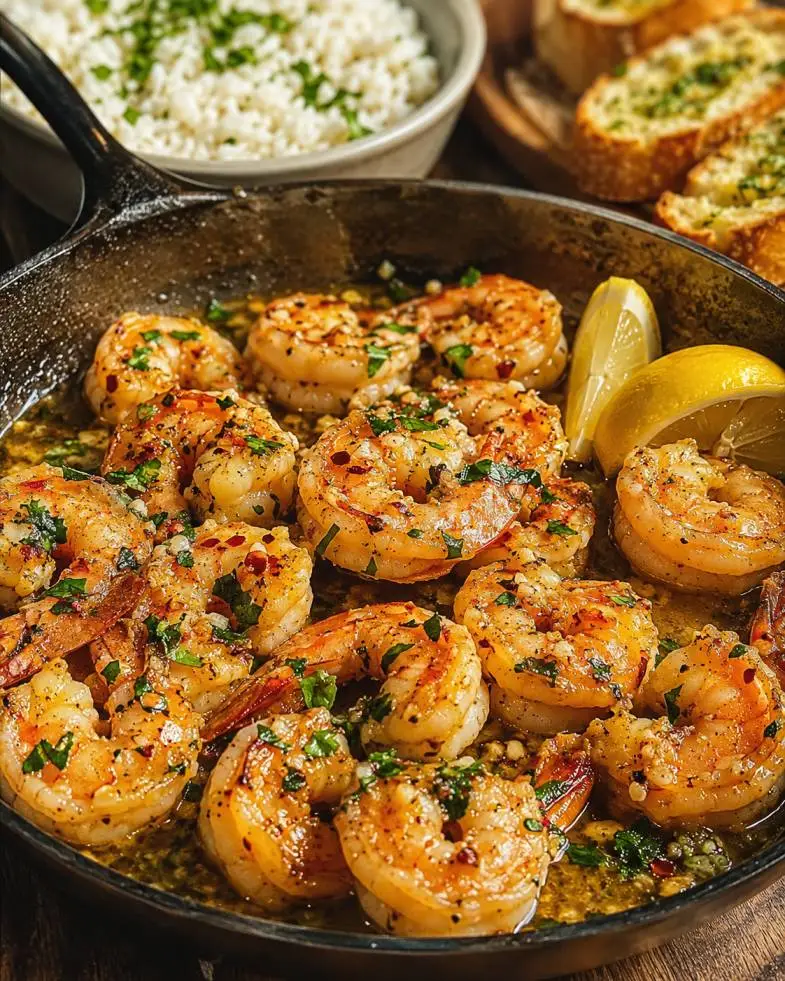
- Off heat, toss in the parsley. Taste, adjust salt, and serve immediately over rice, pasta, or crusty bread.
Why Restaurants Get It So Tender (And You Can Too)
It isn’t a secret ingredient. It’s temperature control and timing, full stop. Professional kitchens sear shrimp hard and fast over high heat, then pull it the moment it turns opaque — not when it “looks done,” which is already a beat too late. Shrimp carries over and keeps cooking from residual heat even off the burner, so if you wait for it to look perfect in the pan, it’ll be tough by the time it hits the plate. Pull early. Trust the carryover.
Three Mistakes That Wreck Good Shrimp
After years of making this dish for family, friends, and the occasional dinner party rescue, I keep seeing the same three things go wrong:
- Crowding the pan. Too much shrimp at once drops the pan temperature and you get gray, steamed shrimp instead of a sear. Cook in batches if needed.
- Skipping the pat-dry step. Surface moisture is the enemy of a good sear. Thirty seconds with a paper towel changes the entire outcome.
- Letting the garlic go too long. Burnt garlic turns acrid and will hijack the whole dish. Thirty seconds in warm butter is plenty.
Using Frozen Shrimp? No Problem.
Skip the overnight thaw. Run frozen shrimp under cold water in a colander for 5–10 minutes, or submerge in a cold water bowl for 15–20, changing the water once. Pat bone-dry before it hits the pan — this matters even more with frozen shrimp, which holds extra moisture. Everything else in the recipe stays exactly the same.
What Not to Mix With Your Shrimp
A few pantry staples work against you here. Skip heavy cream added early — it can break or turn grainy over high heat before the shrimp finishes. Go easy on soy sauce or other strong salty sauces layered on top of butter and lemon; they’ll fight each other instead of building flavor. And resist adding delicate fresh herbs like basil too early — they wilt into nothing and lose their brightness. Save soft herbs for the very end, off the heat, the way we do with the parsley above.
The Bottom Line
Garlic butter shrimp has a reputation as a “fancy” dish, but there’s really nothing complicated happening here — just hot pan, dry shrimp, and a willingness to pull it off the heat a few seconds before you think it’s ready. Get that timing down once, and this becomes the recipe you can make on autopilot on a Tuesday night, or dress up for guests with nobody the wiser about how little effort it actually took.
Made this recipe?
I’d genuinely love to hear how it turned out — drop a comment below or tag your plate. And if you’re hunting for what to serve alongside it, my garlic butter pairs beautifully with a simple arugula salad or warm crusty bread for soaking up every last drop of sauce.