
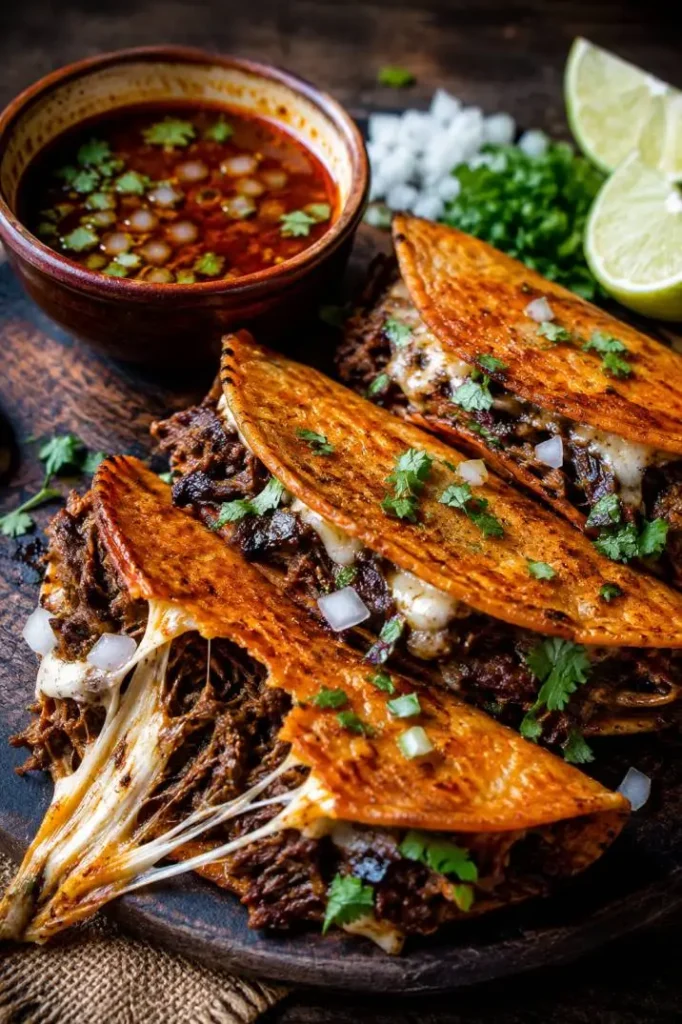
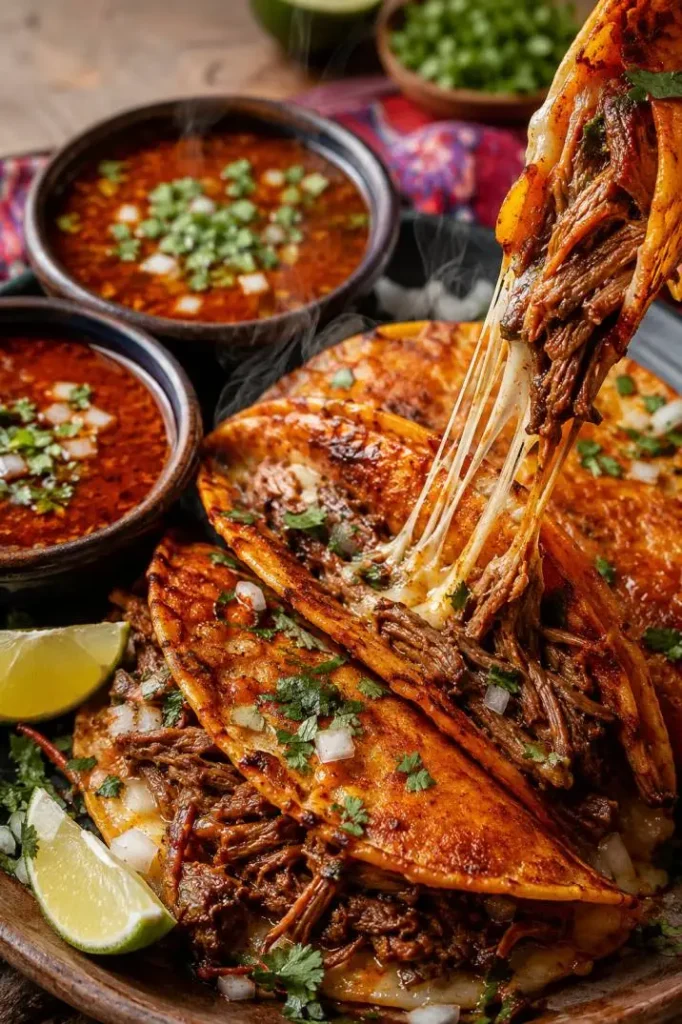
The first time I dunked a quesabirria taco into its own consomé and watched the cheese pull a good eight inches before snapping, I understood why this dish took over Instagram. It’s not just a taco. It’s a taco with a moat of flavor built right in — melted cheese sealing in braised meat, a crispy griddled shell, and a bowl of dip-worthy broth on the side. Once you’ve had one done right, a regular taco starts to feel like it’s missing something.
But here’s where most home cooks get tripped up: quesabirria isn’t just “birria tacos with cheese.” There’s a real technical difference in how it’s built, cooked, and served — and getting that difference right is exactly what separates a soggy, sad taco from one that holds together, crisps up, and actually tastes like something.
I’ve made this dish more times than I can count, tested it with different meats, different tortillas, and enough trial-and-error to know where people go wrong. Let’s get into it.
Key Takeaways
- Quesabirria = birria meat + cheese, griddled crisp in the braising fat, then dipped in consomé. Regular birria tacos skip the cheese and the griddling step.
- Beef chuck or short rib is the standard cut — goat is traditional in parts of Jalisco, but beef is what most people mean by “birria” today.
- Corn tortillas are the correct choice, not flour. Flour tortillas turn gummy and fall apart when dipped.
- The secret to good birria isn’t a secret ingredient — it’s low, slow cooking and toasting your chiles before blending.
- Crispy tacos come from griddling in the reserved fat (called “consomé oil” or the grease that rises to the top), not from a dry pan.
What’s the Real Difference Between Birria Tacos and Quesabirria?
Let’s settle this one first, because it’s the question everyone’s actually asking. Birria itself is a Mexican stew, traditionally made with goat, slow-braised in a broth built from dried chiles and spices until the meat falls apart. Birria tacos are simply that meat, shredded and folded into a tortilla, sometimes dipped in the broth before eating.
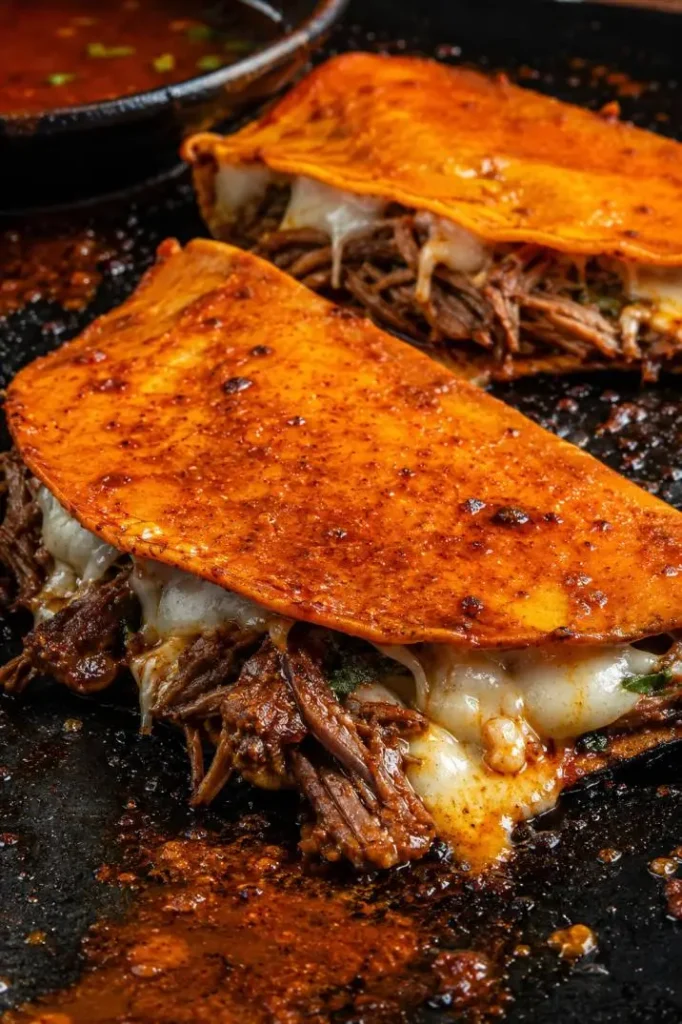
Quesabirria takes that same base and does something smarter with it. The tortilla gets dipped in the fat that floats on top of the consomé, loaded with shredded meat and melted cheese, then griddled on both sides until crispy. You’re not just eating birria in a tortilla anymore — you’re eating a griddled, cheese-sealed pocket that gets dunked in broth for extra flavor with every bite. The cheese isn’t a garnish here. It’s structural. It’s what holds the taco together while it fries.
So if someone asks whether birria tacos and quesabirria are the same thing, the honest answer is: close cousins, not twins. One’s a folded taco. The other’s basically a taco-quesadilla hybrid with its own dipping sauce.
What Cut of Meat Actually Makes Good Quesabirria?
Traditional birria in Jalisco is made with goat (chivo) or mutton, and if you can get your hands on it, it’s worth trying at least once — it has a deeper, slightly gamey richness that beef doesn’t replicate. But let’s be real: goat isn’t sitting in most grocery store meat cases, and that’s exactly why beef birria became the standard outside of Mexico.
For beef, you want cuts with enough connective tissue and fat to survive hours of braising without drying out. Chuck roast is the workhorse — affordable, forgiving, and it shreds beautifully. Short ribs add extra richness if you want to splurge, and a lot of restaurant versions blend the two. What you don’t want is a lean cut like sirloin. It’ll cook fast, sure, but it’ll also turn stringy and dry with nothing to keep it moist through a long braise.
A quick honesty check on the health side, since it comes up a lot: birria isn’t a diet food, and it was never trying to be. Between the fatty cuts and the cheese in quesabirria specifically, you’re looking at a rich, indulgent dish. That doesn’t make it “unhealthy” in some alarming way — it makes it a special-occasion taco, not a Tuesday-night weight-loss meal. If you’re tracking that closely, this isn’t the dish to build a routine around, and that’s fine. Not everything has to be.
Corn or Flour Tortillas? This One Actually Matters
I’ll save you the debate: corn tortillas, every time. This isn’t a stylistic preference — it’s a structural requirement. Quesabirria tacos get dipped in fat and consomé before and after griddling. Flour tortillas absorb that liquid and turn gummy, then tear apart the moment you pick them up. Corn tortillas hold their shape, crisp up properly on the griddle, and give you that slightly charred, sturdy bite that actually stands up to dunking.
Traditionally, birria itself (outside the quesa- treatment) is also served with corn tortillas, so this isn’t quesabirria breaking from tradition — it’s quesabirria doubling down on it. If you only have flour tortillas in the house, make regular tacos with them and save the quesabirria attempt for when you’ve got corn. It’s genuinely not the same dish without them.
The Secret to Good Birria (It’s Not a Secret Ingredient)
Every time I get asked what “makes” great birria, people expect me to name some hidden spice. The truth is less exciting and more useful: it’s technique, not ingredients.
Two things separate flavorful birria from flat, one-note birria. First, toast your dried chiles in a dry pan before blending them into the braising liquid — a minute or two per side until they’re fragrant and slightly darker, not burnt. This wakes up oils that stay dormant if you just toss them in raw. Second, give the braise real time. Two and a half to three hours at a low simmer isn’t optional — it’s what breaks down the collagen and lets the meat take on the chile broth instead of just sitting in it. Rushing this step is the single biggest reason people end up with birria that tastes thin.
If your tacos aren’t getting crispy, the fix is almost always the same: you’re skipping the fat step. After the meat braises, the fat rises and separates from the broth — skim it off and use it to coat your griddle and dip your tortillas before cooking. That fat is doing double duty, adding flavor and creating the crisp, slightly fried texture that makes quesabirria what it is. A dry pan and a plain tortilla will never get you there.
The Recipe
Yields: 12–14 tacos | Active time: 45 minutes | Braise time: 3 hours
For the birria:
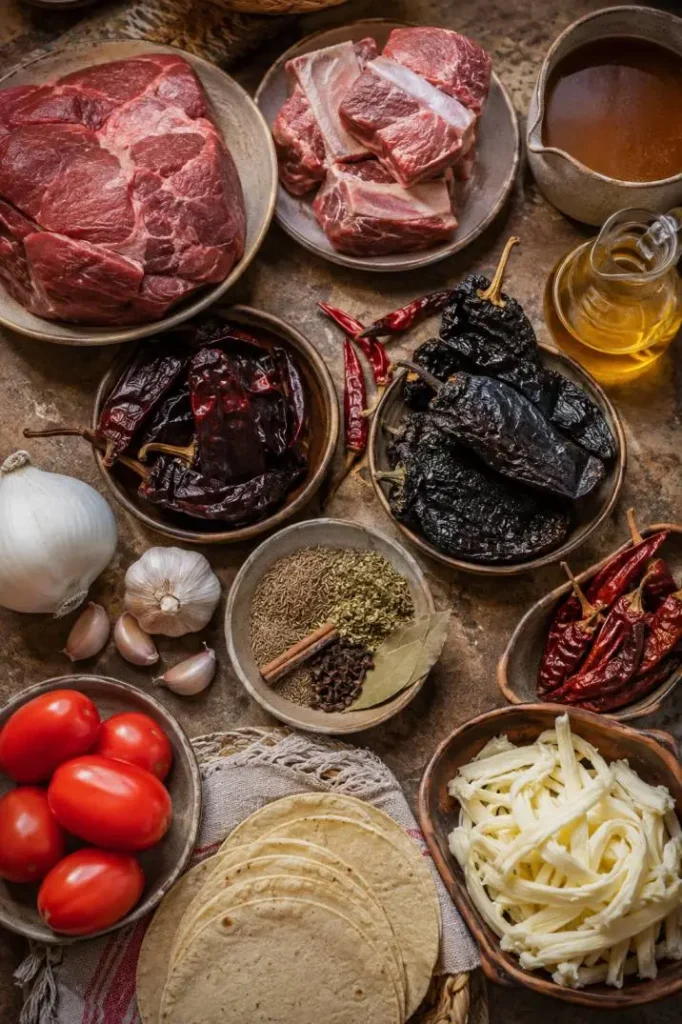
- 3 lbs beef chuck roast, cut into large chunks
- 1 lb beef short ribs
- 4 dried guajillo chiles, stemmed and seeded
- 3 dried ancho chiles, stemmed and seeded
- 2 dried chile de árbol (optional, for heat)
- 1 white onion, halved (plus ½ cup finely diced, for serving)
- 6 garlic cloves
- 2 Roma tomatoes
- 1 tsp cumin seeds
- 1 tsp dried oregano (Mexican, if available)
- 4 whole cloves
- 1 cinnamon stick (about 2 inches)
- 2 bay leaves
- 2 tbsp apple cider vinegar
- 6 cups beef broth, divided
- Salt, to taste
For the tacos:
- 24–28 corn tortillas (double-stacked per taco)
- 3 cups shredded Oaxaca or mozzarella cheese
- Chopped cilantro, for serving
- Diced onion, for serving
- Lime wedges, for serving
Instructions:
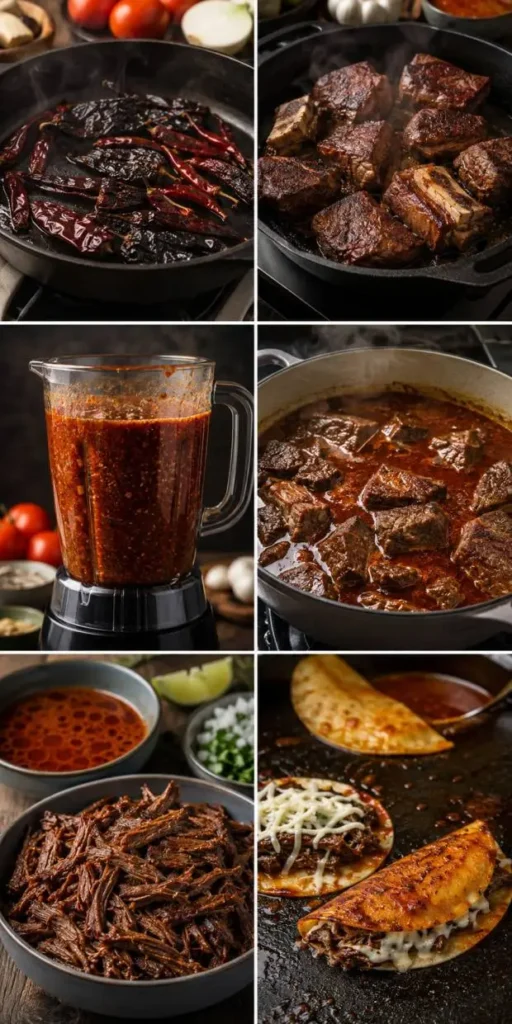
1. Toast and soak the chiles. In a dry skillet over medium heat, toast the guajillo, ancho, and árbol chiles for 60–90 seconds per side until fragrant. Transfer to a bowl, cover with hot water, and soak for 15 minutes until softened.
2. Sear the meat. Pat the beef chunks and short ribs dry, season generously with salt, and sear in batches in a large Dutch oven over high heat until browned on all sides. Set aside.
3. Build the braising liquid. In the same pot, char the halved onion, garlic cloves, and tomatoes for a few minutes. Add these to a blender along with the drained soaked chiles, cumin, oregano, cloves, cinnamon stick, vinegar, and 2 cups of beef broth. Blend until completely smooth.
4. Braise. Return the seared meat to the pot. Pour the blended chile mixture over it, add the bay leaves and the remaining 4 cups of broth (add water if needed to mostly submerge the meat). Bring to a boil, then reduce to a low simmer, cover, and cook for 2.5–3 hours, until the meat shreds easily with a fork.
5. Shred and rest. Remove the meat, shred it with two forks, and discard any large fat chunks or bones. Skim the fat that’s risen to the top of the braising liquid and reserve it separately — this is your griddling fat. Season the remaining consomé with salt to taste.
6. Assemble the tacos. Dip each tortilla in the reserved fat, then lay it on a hot griddle or skillet. Sprinkle cheese on one half, top with shredded meat, fold over, and cook 2–3 minutes per side until deeply golden and crisp, and the cheese has fully melted.
7. Serve. Plate the tacos with small bowls of warm consomé for dipping, topped with diced onion, cilantro, and a squeeze of lime.
The Bottom Line
Quesabirria isn’t complicated once you understand what it’s actually doing: it’s birria that’s been given a crispy, cheese-sealed upgrade and a broth to swim in. Get the meat right, use corn tortillas, don’t skip the fat step, and give the braise the time it needs. That’s the whole game.
Make a batch this weekend and see for yourself — and if your tacos come out crispy and your consomé disappears before the meat does, you’ll know exactly why this dish took over every taco truck menu in the country.