
The first time I made refrigerator pickles, I was trying to save a fridge drawer full of vegetables that were one bad decision away from the compost bin. Half a red onion, three sad carrots, a stray radish, some cauliflower florets I’d bought “for a recipe” and never used. I chopped everything up, poured hot vinegar over it, and forgot about it for two days.
What came out of that jar was better than anything I’d ever bought at a farmers market. Crunchy, tangy, ridiculously colorful — and it took me about ten minutes of actual work. That’s the thing nobody tells you about refrigerator pickling: it’s not really cooking. It’s just chemistry doing you a favor while you sleep.
If you’ve never tried it, or you’ve tried it and ended up with mushy, sad pickles, this guide walks you through exactly how to get it right — including the one ratio that makes the whole process foolproof.
Quick takeaways:
- The 3-2-1 rule (3 parts vinegar, 2 parts water, 1 part sugar) is the backbone of almost every good refrigerator pickle brine.
- You don’t need canning equipment — just jars, a fridge, and patience measured in hours, not weeks.
- Not all vinegars behave the same way, and the wrong one can flatten your flavor or dull your colors.
- Crunch comes down to vegetable choice, cut size, and not skipping the ice-water step.
- You can usually reuse your brine at least once — sometimes more, with a few caveats.
What Is the 3-2-1 Rule for Pickles?
Here’s the thing that makes refrigerator pickling so forgiving: you don’t need a recipe so much as a ratio. The 3-2-1 rule means 3 parts vinegar, 2 parts water, and 1 part sugar, plus salt and whatever aromatics you’re in the mood for. Once that ratio is locked into your head, you can pickle literally anything in your crisper drawer without looking anything up again.
Why does it work so well? The vinegar brings the acidity that actually preserves the vegetables and gives pickles their signature bite. The water tames that acidity so it doesn’t overwhelm you. And the sugar rounds everything out — not enough to make it sweet, just enough to keep it from tasting like straight vinegar shock. Adjust the ratio slightly and you can dial pickles from sharp and puckery to mellow and almost sweet-and-sour, depending on what you’re pairing them with.
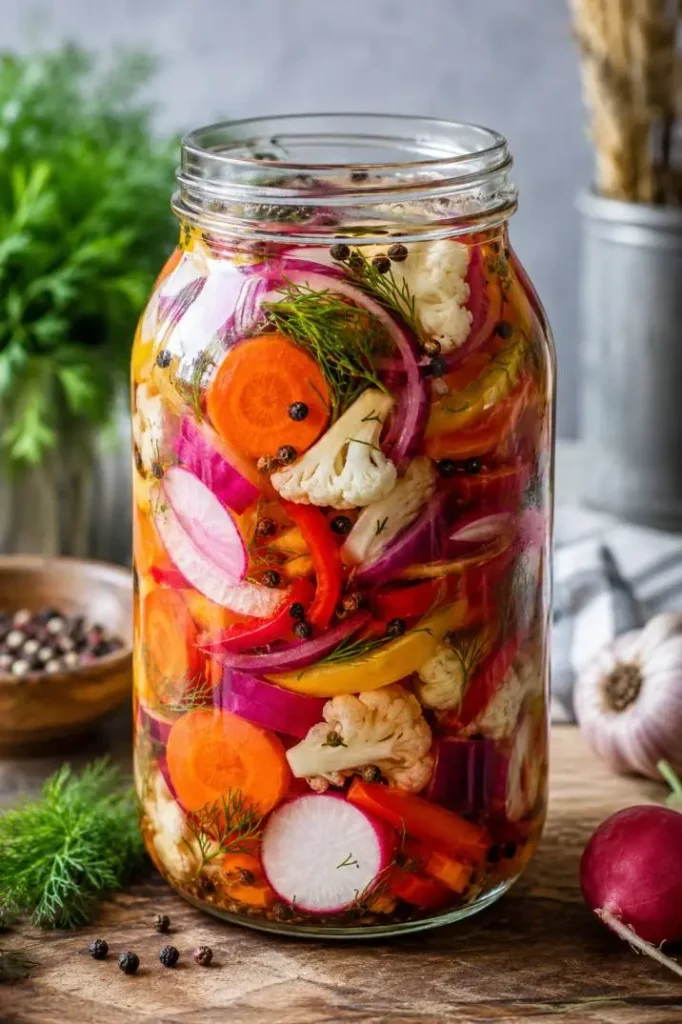
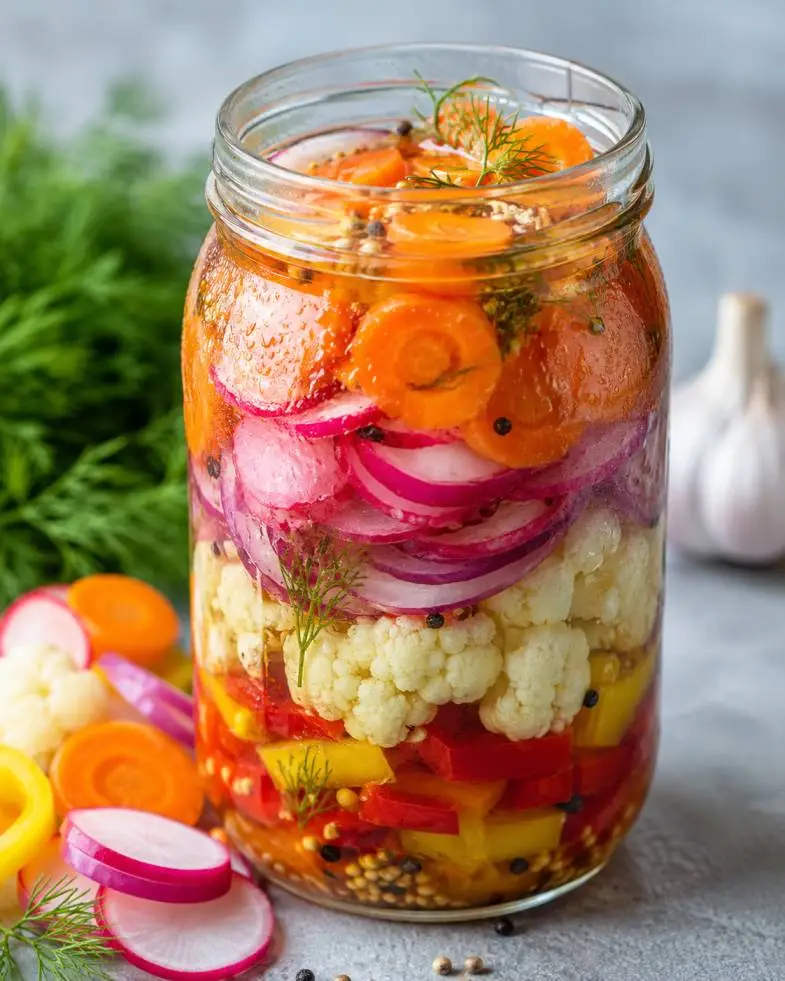
The Recipe: Rainbow Refrigerator Pickled Vegetables
Makes: about 1 quart | Active time: 15 minutes | Ready in: 4 hours minimum, best after 24
Vegetables (about 3–4 cups total, pick 3–5 for the “rainbow” effect):
- 1 cup carrots, sliced into thin coins or matchsticks
- 1 cup radishes, thinly sliced
- 1 cup cauliflower florets, broken small
- 1/2 red onion, thinly sliced
- 1/2 cup sliced red or yellow bell pepper
Brine:
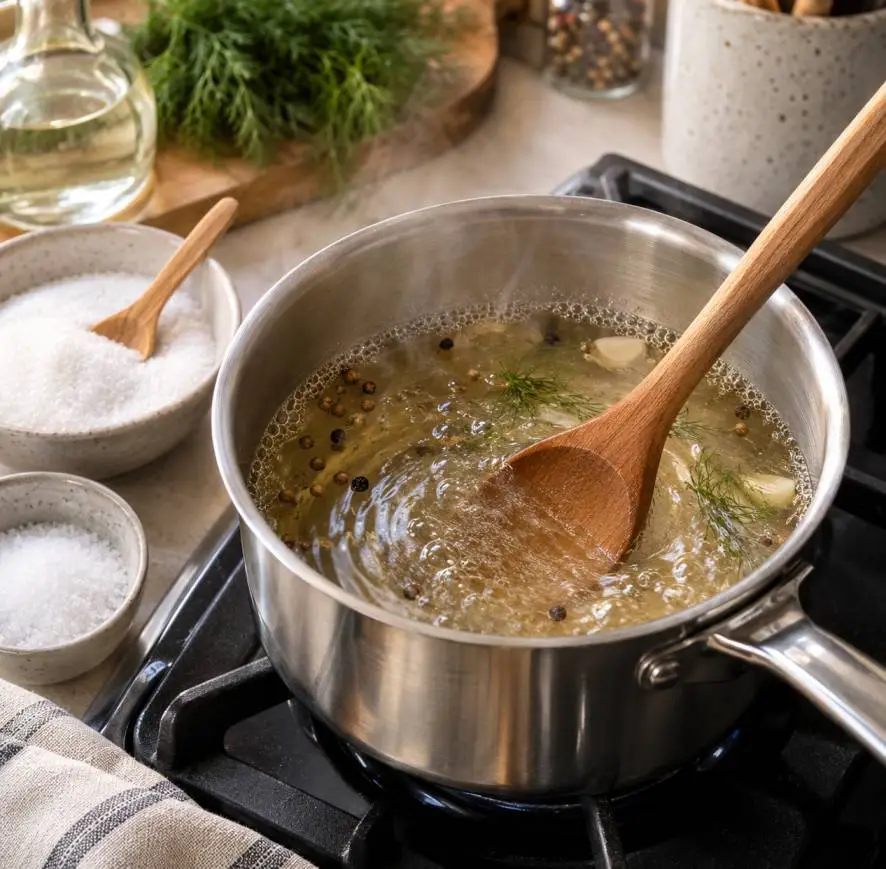
- 3/4 cup white vinegar or apple cider vinegar
- 1/2 cup water
- 1/4 cup sugar
- 1 tablespoon kosher salt
- Optional: 1 clove garlic, 1 tsp mustard seeds, a few peppercorns, a sprig of dill
Method:
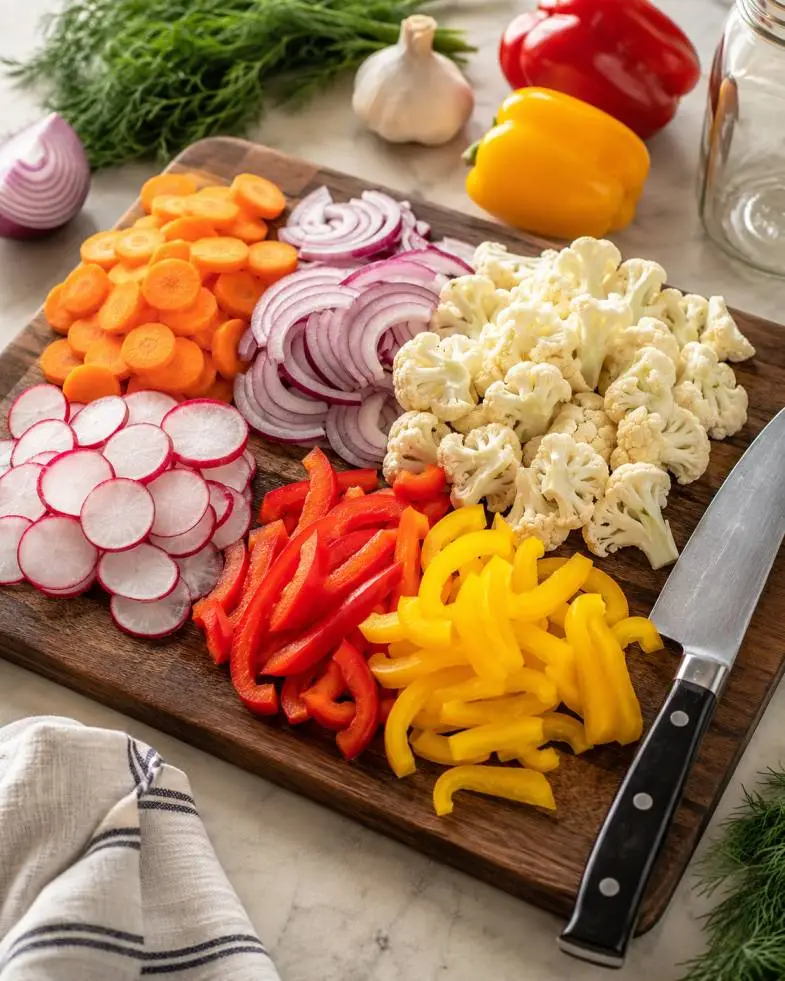
- Slice everything thin and uniform — this matters more than people think, since evenly sized pieces pickle at the same rate.
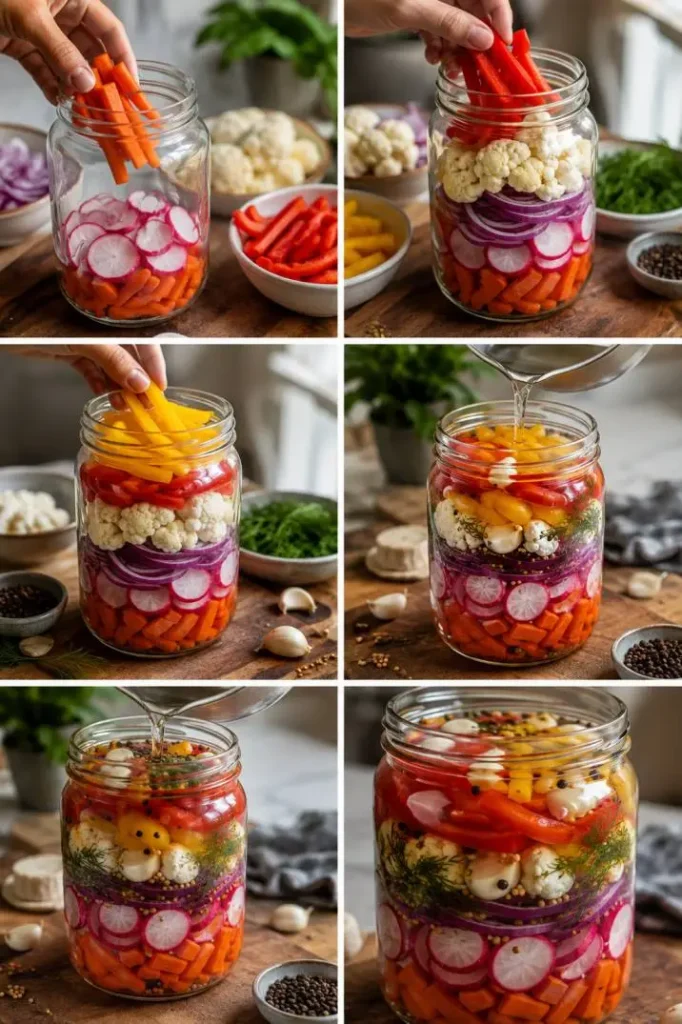
- Pack the vegetables into a clean quart jar, layering colors as you go so it actually looks like a rainbow.
- In a small saucepan, bring vinegar, water, sugar, and salt to a simmer, stirring until dissolved. No need to boil hard — just get it hot enough to dissolve everything.
- Pour the hot brine over the vegetables, making sure everything is submerged. Add your garlic, spices, or herbs now.
- Let the jar cool on the counter for about 20 minutes, then seal and refrigerate.
- Wait at least 4 hours before eating — overnight is better, and the flavor keeps improving for a few days.
That’s genuinely the whole process. No water bath, no sealing rings popping, no fear of botulism keeping you up at night — refrigerator pickles are a fundamentally different (and much less intimidating) thing than canning.
What’s the Best Vinegar for Refrigerator Pickles?
This is probably the question I get asked the most, and the honest answer is: it depends what you’re going for.
White vinegar is the workhorse. It’s sharp, clean, and completely neutral, which means it won’t fight with your vegetables’ natural flavor or muddy their color. If you want that classic, crisp pickle-jar tang — and vibrant, true colors in your rainbow jar — white vinegar is the safer bet.
Apple cider vinegar brings a rounder, slightly fruity, almost caramel-adjacent flavor. It’s fantastic for onions, apples, and heartier vegetables, but it has a golden-brown tint that can mute brighter colors like purple cabbage or beets. If flavor complexity matters more to you than a picture-perfect jar, ACV is worth using — just know your rainbow might look a little more autumnal than neon.
Rice vinegar is another great option if you want something gentler and slightly sweet, especially good with cucumbers and radishes. My honest advice: start with white vinegar until you know your palate, then experiment once you’ve got the base technique down.
What Vegetables Taste Best Pickled?
Almost anything crunchy and low in water content pickles beautifully. My go-to lineup for color and crunch:
- Carrots — reliable, sweet, holds its crunch for weeks
- Radishes — fast pickler, adds sharp pink-red color and peppery bite
- Cauliflower — surprisingly great, picks up flavor without turning to mush
- Red onion — turns a gorgeous magenta and mellows out its raw bite
- Cucumbers — the classic, best eaten within a week
- Green beans — stays crisp, great as a snack straight from the jar
What doesn’t pickle well? Leafy greens turn slimy, potatoes go weirdly gummy, and anything already soft or high in water content (think tomatoes or zucchini) tends to lose its structure fast. Save those for other things.
The most common mistake people make isn’t about which vegetable — it’s skipping the ice bath. If you want serious crunch, especially with cucumbers, a quick dunk in ice water after slicing and before brining makes a noticeable difference. It’s a small step people love to skip, and it’s exactly the step that separates crisp pickles from limp ones.
Can I Reuse My Refrigerator Pickle Brine?
Yes — once, reliably, sometimes twice. After you’ve eaten your way through a jar, the brine has picked up flavor from the vegetables and lost a bit of its acidity, so it’s not quite as strong as it was on day one. For a second round, add fresh vegetables and give it a quick simmer with a small top-up of vinegar and sugar to restore the balance, rather than pouring it cold over new veggies.
A few practical notes: brine reused more than twice starts losing its preserving power and its punch, so it’s best used fresh after that. And it’s genuinely great for more than just a second pickle batch — leftover brine makes an excellent addition to salad dressings, a splash in deviled eggs, or a bright finishing note stirred into potato salad. Treating pickle brine as a one-use liquid is honestly one of the bigger flavor opportunities people leave on the table.
The Bottom Line
Refrigerator pickling is one of those rare kitchen skills that’s simultaneously impressive and almost embarrassingly easy. Once the 3-2-1 ratio is in your head, you’ll never look at a half-used bag of carrots or a lonely red onion the same way again. It’s fast, it’s forgiving, and it turns “vegetables I forgot about” into something people ask you for the recipe for.
Start with the basic rainbow jar above, then start experimenting — swap vinegars, throw in jalapeños for heat, try beets for a jar that stains everything around it hot pink. Once you get the hang of it, you’ll probably never buy pickles from a store again.
Made a jar? I’d genuinely love to know what combination you tried.
Drop a comment with your favorite vegetable mix, or tag your rainbow jar — nothing makes a kitchen experiment feel worth it like seeing what other people did with it.