
I still remember the first pizza I made that actually tasted like something worth serving. It wasn’t loaded with a dozen toppings or some clever combination I’d seen online. It was just cheese. Good dough, a sauce that didn’t taste like it came from a jar, and a cheese blend I’d finally stopped rushing. That pizza taught me something that took years working a pizza line to really believe: a plain cheese pizza is the hardest one to fake. There’s nowhere to hide.
Every extra topping is a little bit of camouflage. Pepperoni covers a mediocre sauce. A pile of vegetables distracts from dough that didn’t proof long enough. But cheese pizza? It’s just three or four ingredients standing there, fully exposed. Get the ratios wrong, rush the bake, or skimp on the cheese blend, and everyone at the table will know. Get it right, and it’s the pizza people quietly go back for seconds of.
So let’s actually get it right.
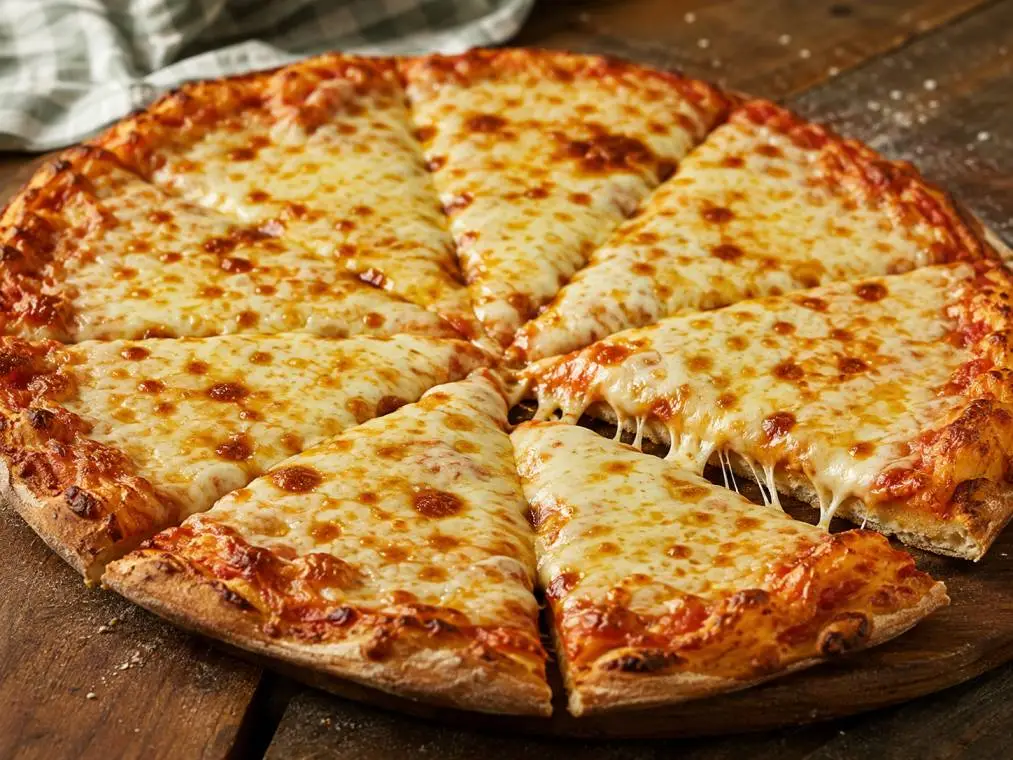
Quick Takeaways Before You Start
- A real cheese pizza is built on three things: dough, sauce, and cheese — and each one deserves more attention than most home cooks give it
- Low-moisture, whole-milk mozzarella is the backbone, but a blend beats a single cheese every time
- Most “bad homemade pizza” problems trace back to too much moisture, not a bad recipe
- Margherita and cheese pizza are close cousins, not the same pizza — the difference is one ingredient and a philosophy
- The oven, not the toppings, is usually what separates pizzeria-quality from average
What’s Actually Supposed to Be on a Cheese Pizza
Here’s where I’ll save you some confusion: a “cheese pizza” isn’t a specific style, it’s a description. It means a pizza built with sauce and cheese and nothing else — no pepperoni, no vegetables, no fuss. That simplicity is exactly why it’s the default order for picky eaters and the litmus test for pizza snobs. Both crowds are judging the same three things, they just don’t realize it.
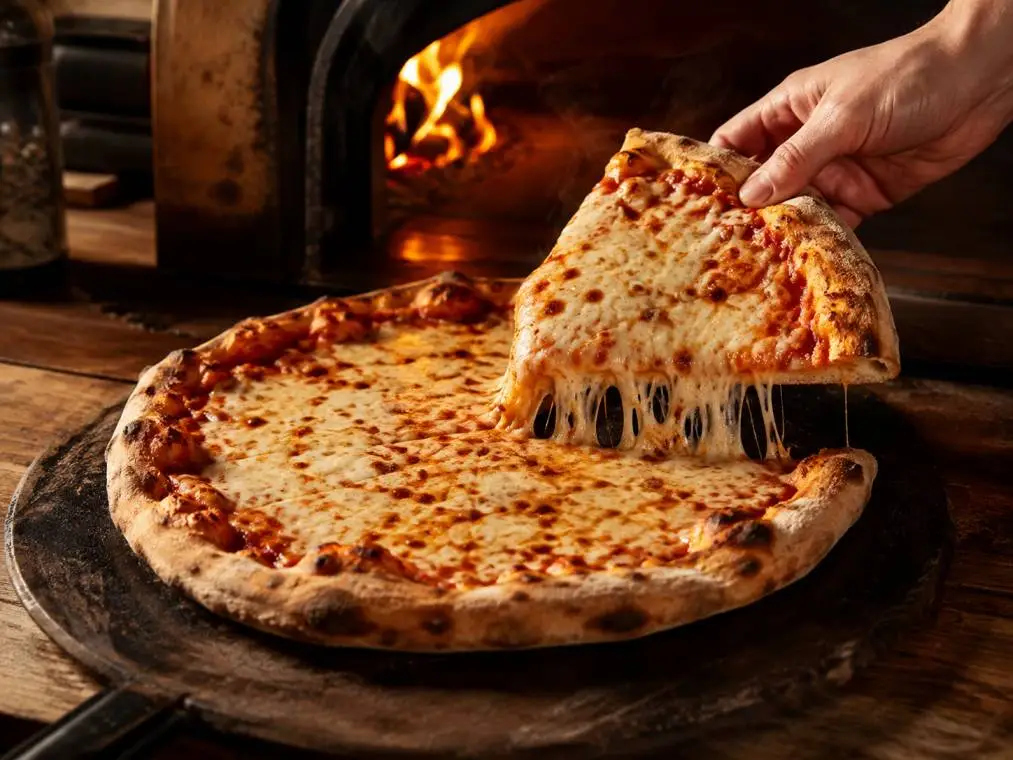
The cheese doing most of the work is low-moisture, whole-milk mozzarella. It melts evenly, stretches without turning greasy, and doesn’t fight with the sauce underneath it. If you’ve ever had a slice where the cheese pooled into an oily layer instead of browning into those beautiful blistered spots, that’s usually fresh mozzarella’s fault — it’s wonderful on a Margherita, and a liability on a classic cheese pie because of how much water it holds.
The Cheese Blend That Actually Makes a Difference
If there’s one thing I’d tell a home cook to change tonight, it’s this: stop using only mozzarella. A single cheese, no matter how good, gives you one flavor note and one texture. A blend gives you depth.
My go-to ratio, and one you’ll find behind a lot of pizzeria counters whether they admit it or not:
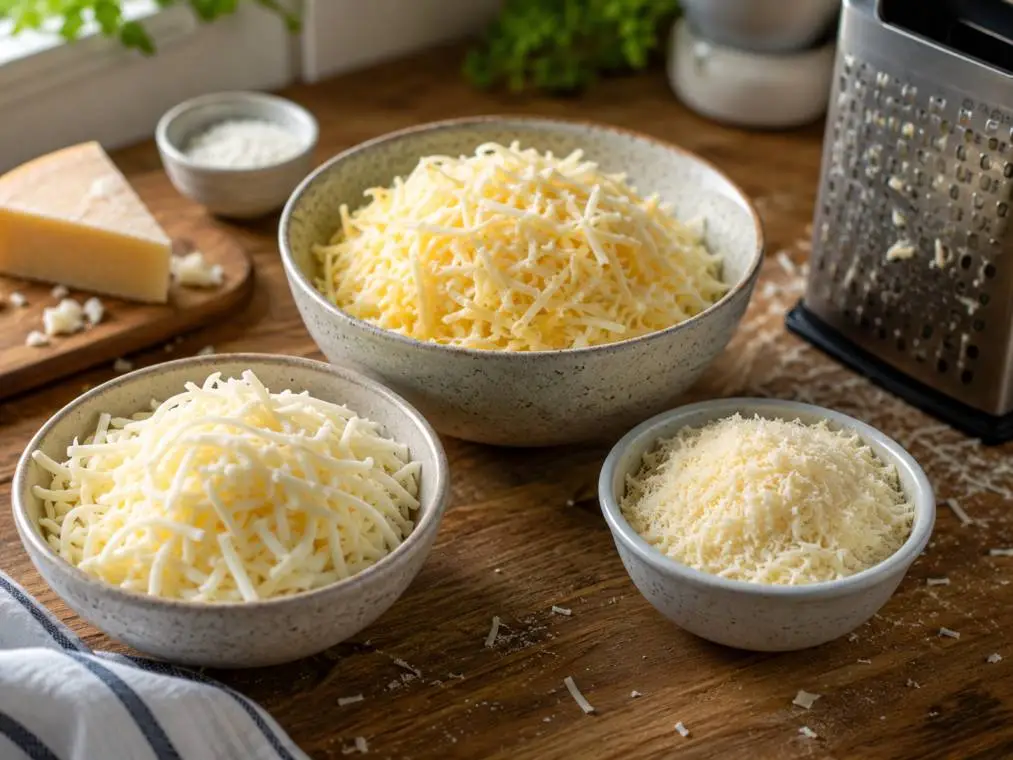
- 70% low-moisture whole-milk mozzarella — the meltable, stretchy foundation
- 20% provolone — adds a slight tang and a deeper, savory backbone
- 10% freshly grated Parmesan or Pecorino Romano — sharp, salty, and it’s what makes the top of the pizza smell incredible as it bakes
Skip the pre-shredded bag if you can. It’s coated in anti-caking starch that keeps it from melting the way freshly grated cheese does. I know it’s an extra five minutes with a box grater. Those five minutes are the difference between cheese that melts into the sauce and cheese that just sits there looking sad.
The Actual Recipe
This makes two 12-inch pizzas, which is the right amount for two people who are actually hungry, or four people sharing other things too.
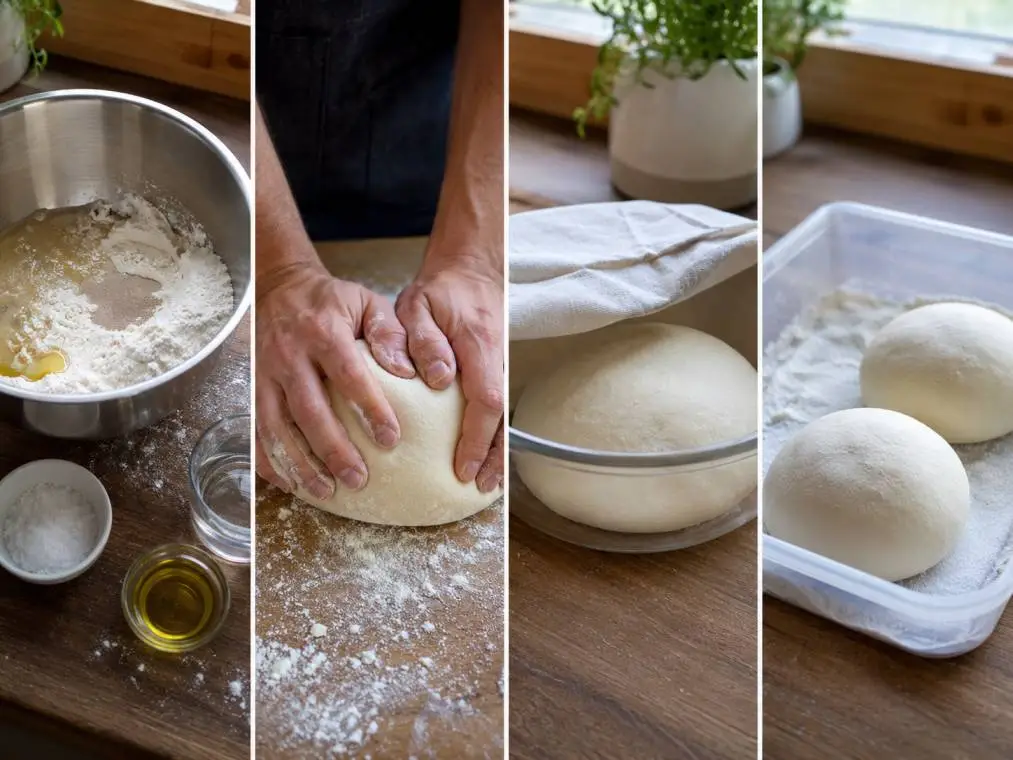
For the dough: 500g bread flour, 325g warm water, 10g salt, 3g instant yeast, 15g olive oil. Mix and knead until smooth, about 8 minutes by hand or 5 in a stand mixer. Let it rise covered for an hour, then divide into two balls and refrigerate at least 24 hours — this slow, cold fermentation is what builds real flavor instead of just bulk.
For the sauce: One can of whole peeled San Marzano tomatoes, crushed by hand (not pureed — you want texture), a pinch of salt, and nothing else while it’s raw. Do not cook it first. The oven does that job, and pre-cooked sauce on pizza almost always tastes flat.
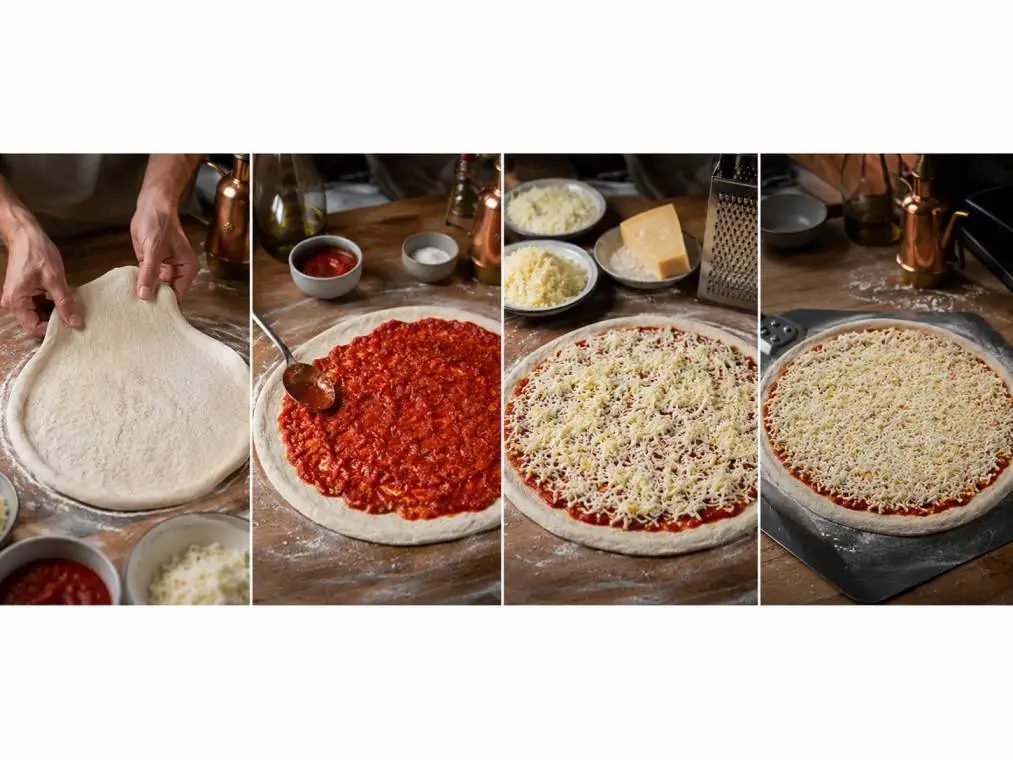
To build it: Pull your dough ball out an hour before baking to come to room temperature. Stretch it by hand, working from the center outward — a rolling pin knocks out the air bubbles you spent 24 hours building. Spread a thin layer of sauce, leaving a bare edge for the crust. Cover with your cheese blend, all the way to the edge this time. Bake as hot as your oven goes, ideally 500°F or higher, on a preheated pizza stone or steel, for 8 to 10 minutes until the crust is blistered and the cheese has browned in spots, not just melted.
Where Most Home Cooks Go Wrong
I’ve watched a lot of home pizza attempts go sideways, and it’s almost never the recipe. It’s one of these four things:
Too much sauce. A thick layer of sauce steams the dough instead of letting it crisp. Thin is correct, not stingy — it should look almost too light before it bakes.
An oven that isn’t hot enough. Most home ovens top out around 500°F, and that’s fine, but you have to actually preheat the stone or steel for a full 45 minutes to an hour. A cold stone is the single biggest reason home pizza turns out pale and soggy instead of blistered.
Skipping the cold ferment. Same-day dough works, but it never develops the flavor that a 24 to 48-hour cold rise gives you. This is the free upgrade nobody takes advantage of.
Overloading the cheese. More isn’t better here. Too much cheese means it never fully melts before the crust burns, and you end up with a pizza that’s gummy in the middle. A moderate, well-distributed layer beats a mountain of shreds every time.
Cheese Pizza vs. Margherita: Clearing Up the Confusion
People ask me this constantly, and I get why — on the surface, they look like the same thing. But there’s a real distinction, and it comes down to intent as much as ingredients.
A Margherita is traditionally built with fresh mozzarella, fresh basil, and San Marzano tomatoes, and it’s meant to showcase those three ingredients in their purest form — it’s practically a flag, referencing the colors of Italy. A classic American-style cheese pizza uses low-moisture mozzarella (sometimes blended, as above), cooked sauce or a raw crushed sauce, and no basil, and it’s built for a heartier, more melty, more “everyday” bite rather than a delicate showcase of three ingredients.
Neither is more “correct.” They’re built with different goals — one is a celebration of simplicity, the other is comfort food optimized for cheese pull and crust crunch. If you’re choosing between them for a healthier option, the Margherita often edges ahead slightly, mostly because fresh mozzarella tends to be lower in sodium than aged, low-moisture blends — but we’re talking about a marginal difference, not a diet food.
The Bottom Line
A great cheese pizza isn’t about a secret ingredient or a trick you’ve never heard of. It’s about respecting three simple components enough to not rush any of them — a dough that’s been given time, a sauce that hasn’t been cooked to death, and a cheese blend that does more than one job. That’s really it. That’s the whole secret, and it’s the same one behind every pizzeria pie you’ve ever gone back for seconds of.
Make this one this weekend. Use the real cheese blend, give the dough its cold rest, and get your oven properly hot before the dough goes anywhere near it. I’d genuinely like to know how it turns out — drop a comment with what you changed, what worked, and what you’d do differently next time. That’s how every good pizza recipe actually gets better.